How to Spot Fake Tinder Profiles in 2026


Understanding the Rise of Fake Tinder Profiles
Fake Tinder profiles present a significant challenge in the digital dating landscape. These profiles often masquerade as genuine users, deceiving others with misleading information or images. The rise of fake Tinder profiles is becoming increasingly troublesome, driven by motives ranging from trolling to online dating scams. Understanding this trend involves examining the frequency of such occurrences, unpacking why they proliferate, and assessing their implications for legitimate users seeking genuine connections. This section delves into these aspects, highlighting the current dynamics of the online dating scene.
The Prevalence of Fake Profiles on Tinder
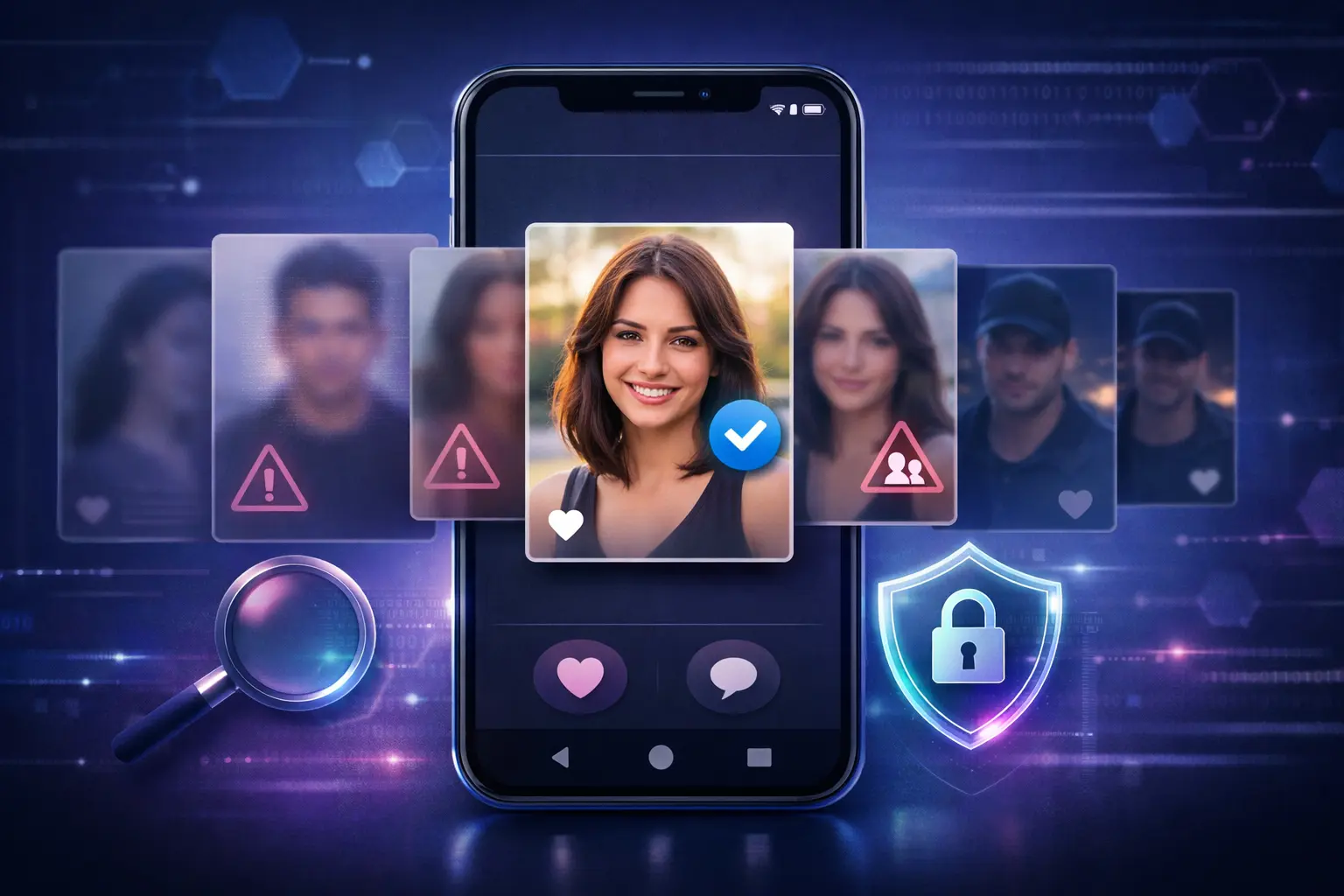
While analyzing user behavior and platform dynamics on Tinder, I repeatedly encountered evidence that fake profiles are not isolated incidents but a systemic issue. Throughout my research, a consistent pattern emerged: a high volume of user complaints pointing to fraudulent accounts that behave in strikingly similar ways.
One of the most notable findings is the extensive use of automated bots. These profiles are often designed to convincingly imitate real people – from polished photos to scripted conversational flows that respond quickly and emotionally. Their primary purpose is not connection, but manipulation: redirecting users to external sites, encouraging paid interactions, or sustaining conversations that ultimately lead nowhere.
Another major challenge I identified is the difficulty of identity verification at scale. With millions of active users, the platform struggles to authenticate profiles efficiently, allowing fake accounts to blend in seamlessly with legitimate ones. This creates an environment where even attentive users can struggle to distinguish genuine interest from algorithmically generated behavior.
Based on my observations, the prevalence of fake profiles on Tinder is driven by three core factors:
A consistently high number of user reports flagging suspicious activity,
Widespread reliance on bots that simulate human interaction,
And structural limitations in verifying user identities across such a massive user base.
Together, these factors significantly affect user trust and the platform's overall credibility.
[block:ladies]
Why Fake Profiles are a Growing Concern
In the course of my research, it became increasingly clear that fake profiles on Tinder are no longer a minor nuisance–they are a growing structural problem. The primary concern lies in their strong association with online dating scams. Many of these profiles are deliberately engineered to exploit users, whether by extracting personal data, manipulating emotions, or encouraging financial transactions under pretenses.
What makes this issue particularly persistent is the anonymity inherent to online dating. This lack of immediate accountability allows scammers to operate with minimal risk, often disappearing before consequences can occur. Combined with the sheer volume of active profiles on Tinder, this anonymity significantly complicates efforts to detect and remove fraudulent accounts at scale.
Another critical consequence I observed is the erosion of trust within the platform’s ecosystem. As fake profiles proliferate, users become more guarded and suspicious, which ultimately disrupts the formation of genuine connections. Even legitimate interactions are often met with doubt, undermining the app's core purpose.
Impact on Genuine Tinder Users
From the perspective of real users, the presence of fake profiles has a tangible and negative impact on the overall dating experience. One of the most immediate effects is wasting time and emotional energy on interactions that turn out to be entirely fabricated. Over time, repeated exposure to such experiences leads to frustration and emotional fatigue.
Beyond disappointment, there are more serious risks involved. My findings show that fake profiles frequently serve as gateways to privacy breaches and financial scams, increasing users’ fear of engaging openly on the platform. As a result, many users either limit their activity or abandon the app altogether.
These patterns contribute to three major outcomes:
Growing skepticism toward matches and conversations,
Heightened concern over personal data and financial safety,
And a noticeable decline in user satisfaction and overall trust.
Collectively, these effects harm individual users and pose a long-term threat to Tinder’s reputation as a space for authentic and meaningful connections.
Signs of Fake Tinder Profiles
Fake Tinder profiles are a prevalent issue in today’s online dating environment, often causing distress and confusion among users. Recognizing the signs of these counterfeit profiles is critical for maintaining a safe and enjoyable dating experience. This section delves into the specific indicators of fake Tinder profiles, helping users easily identify them. By understanding what to look for–ranging from missing profile details to suspiciously swift message replies–users can navigate the app more safely and effectively.
Missing Profile Information
During my analysis of suspicious Tinder accounts, one of the most consistent indicators of fake profiles was incomplete or entirely missing profile information. In authentic user profiles, individuals usually include at least a short bio and mention their interests, hobbies, or professional details to present themselves more convincingly to potential matches.
Fake profiles, by contrast, tend to avoid personal depth. In many cases, I observed accounts with no bio at all or with generic, non-descriptive text that offers no real insight into the person behind the profile. This absence of personal details appears intentional, allowing such profiles to remain flexible and reusable across multiple targets.
The most common patterns I identified include:
The complete absence of a bio or any personalized description,
No references to hobbies, interests, or lifestyle details.
Use of Single or Stock Photos
As part of my examination of fraudulent Tinder profiles, photo selection emerged as one of the clearest indicators of inauthentic behavior. Fake accounts frequently rely on a single image or a limited set of photos that appear professionally produced rather than naturally captured. This lack of visual diversity is a recurring red flag. In contrast, genuine users tend to share multiple photos that capture different moments of their lives—casual settings, varied expressions, and everyday environments—all of which contribute to a sense of authenticity and credibility. When a profile lacks this variety, it often signals that the identity has been constructed rather than lived.
Throughout my analysis, two visual patterns repeatedly stood out:
Images that look overly polished, resembling professional modeling photos,
The use of stock images can be traced back to online image databases.
Unusually Fast Message Responses
During my observation of suspicious Tinder interactions, response timing proved to be a surprisingly reliable indicator of fake profiles. In many cases, fraudulent accounts replied almost instantly, regardless of the time of day or the complexity of the message. Such speed is rarely consistent with natural human behavior. These rapid responses were also highly predictable. Rather than engaging with the specific content of a message, fake profiles often relied on generic phrases that could apply to virtually anyone. This pattern strongly suggests the involvement of automated systems or scripted scam operations rather than real, attentive users.
The most common signals I identified include:
Immediate replies that feel impersonal or automated,
Responses that ignore context and lack meaningful personalization.
When fast response times are combined with shallow or generic messaging, they are a strong warning sign of a non-genuine interaction.
Common Tinder Scams to Avoid
Tinder scams are increasingly sophisticated, posing significant risks to users hoping for genuine connections. Staying informed about these scams not only protects personal information but also ensures a safer online dating experience. The prevalence of such scams highlights the need for vigilance and education. This section explores some of the most common Tinder scams to avoid, providing insight into catfishing, pitfalls of two-factor authentication, and sugaring and promoter deceptions.
Catfishing and Romance Scams
In my research, I found that catfishing remains one of the most common and damaging scams on Tinder. This practice involves individuals creating entirely fake identities to deceive other users. Often, the goal is to manipulate emotions, gain trust, and, in many cases, extract financial benefits. A hallmark of catfishing is the fabrication of personal details. Scammers frequently construct elaborate backstories, invent careers, or claim experiences that make them appear more relatable and trustworthy. Accompanying these narratives, they almost always use stolen or stock photos to give a face to their false persona.
Another consistent pattern I observed is the progression from emotional connection to financial requests. Once trust is established, catfishers often ask for gifts, money, or other forms of assistance, exploiting the victim’s emotional investment.
The most common characteristics of catfishing accounts include:
Use of stolen photos or entirely fabricated bios,
Requests for money or gifts after forming an apparent emotional bond.
Through repeated observation, it became evident that catfishing not only harms individual users emotionally but also undermines overall trust within the Tinder community.
Two-Factor Authentication Scams
In my investigation of Tinder scams, I observed a worrying trend involving two-factor authentication (2FA). Scammers often impersonate Tinder support or other official services, creating a false sense of urgency to manipulate users. By convincing individuals that their accounts have issues requiring immediate attention, these fraudsters trick them into revealing authentication codes. Once obtained, the scammers gain unauthorized access, potentially compromising personal data and account integrity.
Key behaviors I identified include:
Claims of account problems that demand urgent action,
Requests for personal authentication codes under pretenses.
These tactics exploit users’ trust in platform security measures, turning a protective feature like 2FA into a vulnerability.
Sugaring and Promoter Scams
Another pattern that emerged from my research involves so-called sugaring schemes and fake promoter accounts. These profiles promise financial rewards or exclusive experiences, often targeting users’ desires for connection, excitement, or status. However, their primary motivation is monetary gain rather than genuine interaction.
Typical strategies I observed include:
Promises of large sums of money in exchange for “sugar” arrangements,
Offers of exclusive event invitations contingent upon upfront fees.
These scams are particularly effective because they exploit emotional appeal and the allure of opportunity, making users more susceptible to financial loss.
Protecting Yourself from Scams
Protecting yourself from scams is crucial to ensuring a safe online dating experience. With the prevalence of fake profiles and sophisticated scams on platforms like Tinder, users need to employ effective measures to safeguard their personal information and emotional well-being. This section will guide users in verifying profile authenticity, communicating safely, and reporting suspicious activity to ensure their time online is both enjoyable and secure.
Verifying Profile Authenticity
In my research, verifying a Tinder profile starts with examining photos and personal information. Genuine users usually have multiple images and detailed bios. I often use reverse image searches to check for stolen or stock photos and compare conversation details with profile information. Discrepancies in photos, interests, or personal data often indicate a fake account.
Key steps:
Check multiple profile photos
Use reverse image searches
Сross-check profile info with conversation details
Safe Communication Practices
In my observations, staying within the app for all interactions is crucial. I would suggest against sharing personal contact details too early, and to be careful if someone asks for a move to another platform. Such requests often signal attempts to bypass monitoring. Trusting your instincts is essential — if something feels off, it probably is.
Key tips:
Communicate only within the app
Avoid sharing personal information
Be wary of off-app messaging requests
Reporting Suspicious Activities
Throughout my research, I found that reporting suspicious behavior is an effective way to protect both yourself and the wider Tinder community. Familiarity with the app’s reporting tools allows users to flag fraudulent accounts and potentially prevent scams. Encouraging others to do the same strengthens community safety.
Key tips:
Report suspicious profiles
Understand the app’s reporting tools
Help promote safety within the community
Expert Tips for Safe Online Dating
Safe online dating requires awareness and proactive measures to protect oneself from potential threats. As digital connections become a staple of modern relationships, understanding the landscape of online dating hazards is vital. This section provides expert tips to help users navigate dating apps securely. By learning how to identify Tinder bots and staying vigilant, daters can enjoy safe and fulfilling experiences
How to Spot Tinder Bots
Tinder bots are automated profiles designed to engage users for malicious purposes. Spotting these fake accounts involves recognizing atypical patterns and behavior.
Generic messages: Bots often send vague or random messages.
Link requests: Bots may try to redirect users to external sites.
Immediate declarations of love or excessive flirting.
Staying Vigilant on Dating Apps
Staying vigilant is crucial for dating safety. Users should regularly update privacy settings and be cautious of sharing personal information. Trust your instincts if a profile seems too perfect or requests financial help. Regularly reviewing app permissions can also help safeguard personal data and reinforce your defenses against potential scams.
Understanding Online Dating Risks
Understanding the risks of online dating is essential for safe online engagement. Risks include catfishing, identity theft, and financial scams. Educating oneself about these dangers enhances preparedness and confidence. Platforms offer safety features such as report buttons and profile verification that users should use. Awareness of these risks empowers users to make informed decisions while dating online.
Staying Safe and Finding Genuine Connections
Through my research, it became clear that safe dating practices are essential not only for avoiding scams but also for fostering genuine connections online. As digital dating evolves, users must stay vigilant against fake profiles, phishing attempts, and other deceptive behaviors. This involves being aware of warning signs, applying strategies to build trust, and using available resources to enhance online safety. By focusing on these principles, users can create a more secure and positive dating experience.
The Importance of Awareness
Being aware of the potential risks involved in online dating is the first step toward ensuring a safe dating experience. Awareness helps users identify red flags and scams that might otherwise go unnoticed. Regular exposure to online safety tips can reinforce necessary precautions.
Stay updated on common scams through trusted dating forums.
Use official guides and resources from dating platforms.
Participate in online safety workshops offered by dating sites.
Building Trust Online
Establishing trust in the digital dating world requires care and strategic communication. Start by verifying profiles before engaging in personal conversations. Gradual information sharing and clear boundaries are essential in building a solid foundation.
Verify profiles using reverse image searches.
Use video calls to verify identity.
Avoid sharing sensitive information too soon.
Resources for Further Learning
Various resources are available to enhance your understanding of online safety and safe dating practices. These provide additional guidance and support to strengthen your defenses against scams.
Online dating safety courses on platforms like Coursera.
Guides and articles from cybersecurity websites.
Books focused on modern dating and digital etiquette.
Discover Genuine Connections on LuluDate
From my observations, LuluDate focuses on fostering authentic connections by creating a trustworthy environment for users. The platform emphasizes real interactions, allowing members to build relationships without the fear of deceit. Success stories from verified matches highlight the impact of genuine connections.
Meet Verified Users
LuluDate requires every user to go through a verification process to ensure authenticity. This approach minimizes the presence of fake profiles, offering you peace of mind. Whether you are seeking friendships or long-term relationships, Luludate’s commitment to verified users enhances your chance of meeting like-minded individuals.
Enhance Your Dating Experience
Joining LuluDate means enhancing your online dating journey with personalized matches tailored to your preferences. The platform offers unique features that go beyond traditional swipe mechanics, fostering meaningful interactions. Engage with the community and elevate your dating experience.
[block_inline:info_card]